Need Help? Call or Text: (918) 420-9999
Need Immediate Help? Call or Text: (918) 420-9999

Not a Government Entity
Questions? Call (918) 420-9999
Questions? Call (918) 420-9999
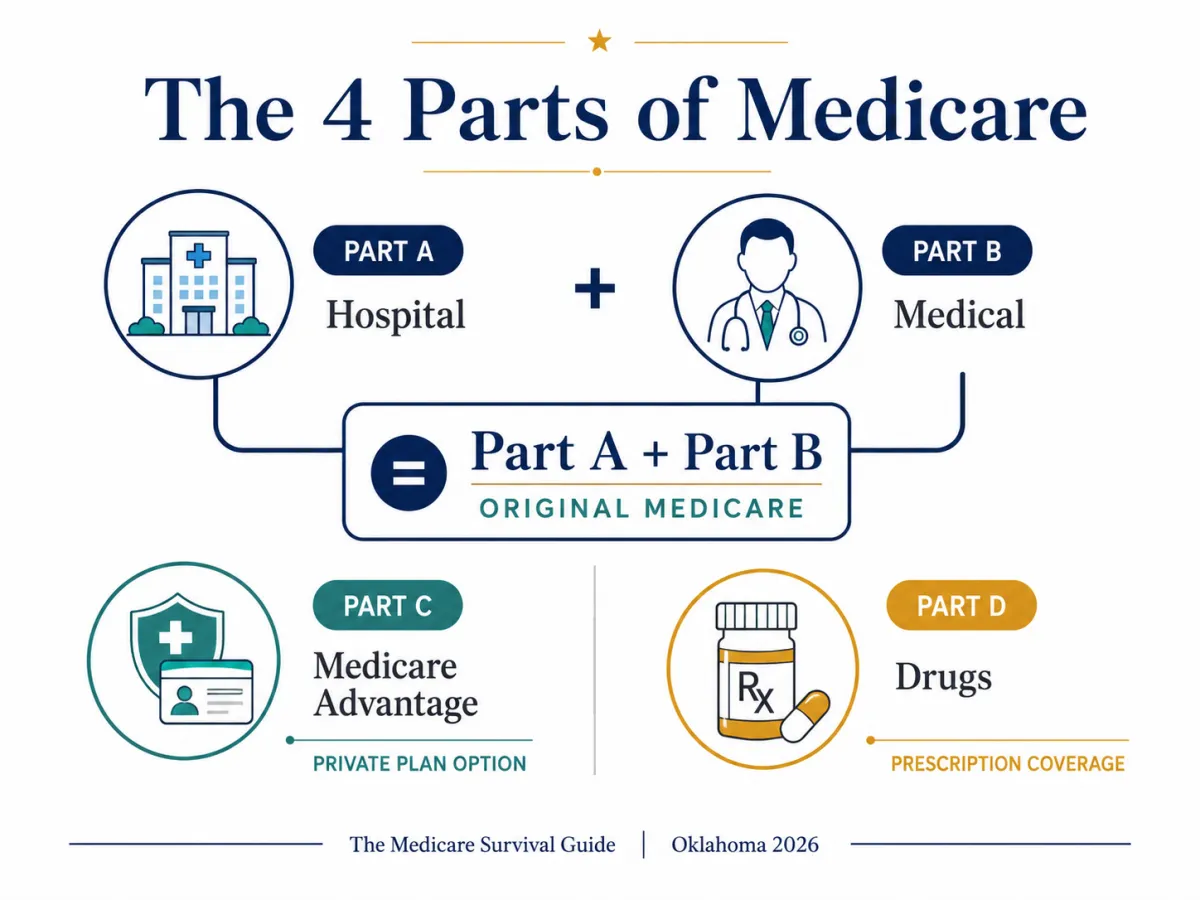
The 4 Parts of Medicare
Medicare isn't one single plan — it's made up of four parts, each covering something different. Once you know what each part actually does, the alphabet soup (A, B, C, D) starts to make a lot more sense.
Here's a quick breakdown of what each part covers, so you can see how they fit together and figure out which ones apply to you.

Why Are There Four Parts?
Medicare grew over time to cover more needs, which is why it ended up split into separate parts instead of one all-in-one plan. Each part was added to fill a specific gap — hospital care, doctor visits, private plan options, and prescription drugs.
Maybe this sounds familiar:
• "I assumed Part A and Part B covered everything."
• "I don't know which parts I actually need."
• "I'm afraid I'll pick wrong and get stuck with the bill."
• "Everyone who calls me is trying to sell me something."
None of that means you're behind. It means no one has explained the four parts clearly yet. Once you see what each one does, it's much easier to see which combination fits your situation.
Part A & Part B: Original Medicare
Original Medicare is run by the federal government and comes in two parts. Together, Part A and Part B are what's meant by "Original Medicare."
What is Part A? (Hospital Insurance)
Medicare Part A covers inpatient hospital care, skilled nursing, hospice, surgery, and home healthcare. Deductibles and cost-sharing will apply. Most folks will not have to pay Part A premiums.
What is Part B? (Medical Insurance)
Medicare Part B covers doctor visits, preventive care, outpatient services, and lab tests. Part B has a monthly premium, and a deductible and cost-sharing will apply. Part A and Part B together make up "Original Medicare."
What Original Medicare Doesn't Cover
This is the part that catches people off guard. On its own, Original Medicare generally does not include:
• Prescription drug coverage — that's Part D, offered through private plans
• Routine dental, vision, and hearing care
• An annual cap on your out-of-pocket costs
That doesn't mean you're stuck. It means Original Medicare is a foundation — and most people add something to it.
Where Parts C and D Fit In
What is Part C?
Part C, also known as Medicare Advantage, is a different way to receive your Medicare benefits. A Medicare Advantage plan bundles Part A, Part B, and usually Part D into one comprehensive plan with a private carrier.
What is Part D?
Medicare Part D helps pay for prescription medications. It's available as a stand-alone option (PDP) that works alongside Original Medicare, or as part of a Medicare Advantage plan. Part D plans are offered by private insurance companies contracted and approved by Medicare. Learn more about Prescription Drug Plans.
You Don't Have to Sort This Out Alone
Work with a Local Expert
You could spend weeks cross-checking articles and still wonder what you missed. Or you could sit down with someone who explains this every day. We're education-first — our job is to help you understand your options before you ever choose a plan. No pressure, no obligation, and our guidance doesn't cost you anything. You ask the questions; you decide what happens next.
Still Not Sure Which Parts You Need?
Everyone's mix of Part A, B, C, and D looks a little different depending on their health needs, budget, and the doctors they want to keep. Some people stick with Original Medicare (A & B) plus a Medigap and Part D plan. Others choose a Medicare Advantage plan (Part C) that bundles everything, often including drug coverage, into one card.
There's no single "right" combination — just the one that fits your situation. Talking it through with someone who isn't selling you a specific plan can make the decision a lot less stressful.

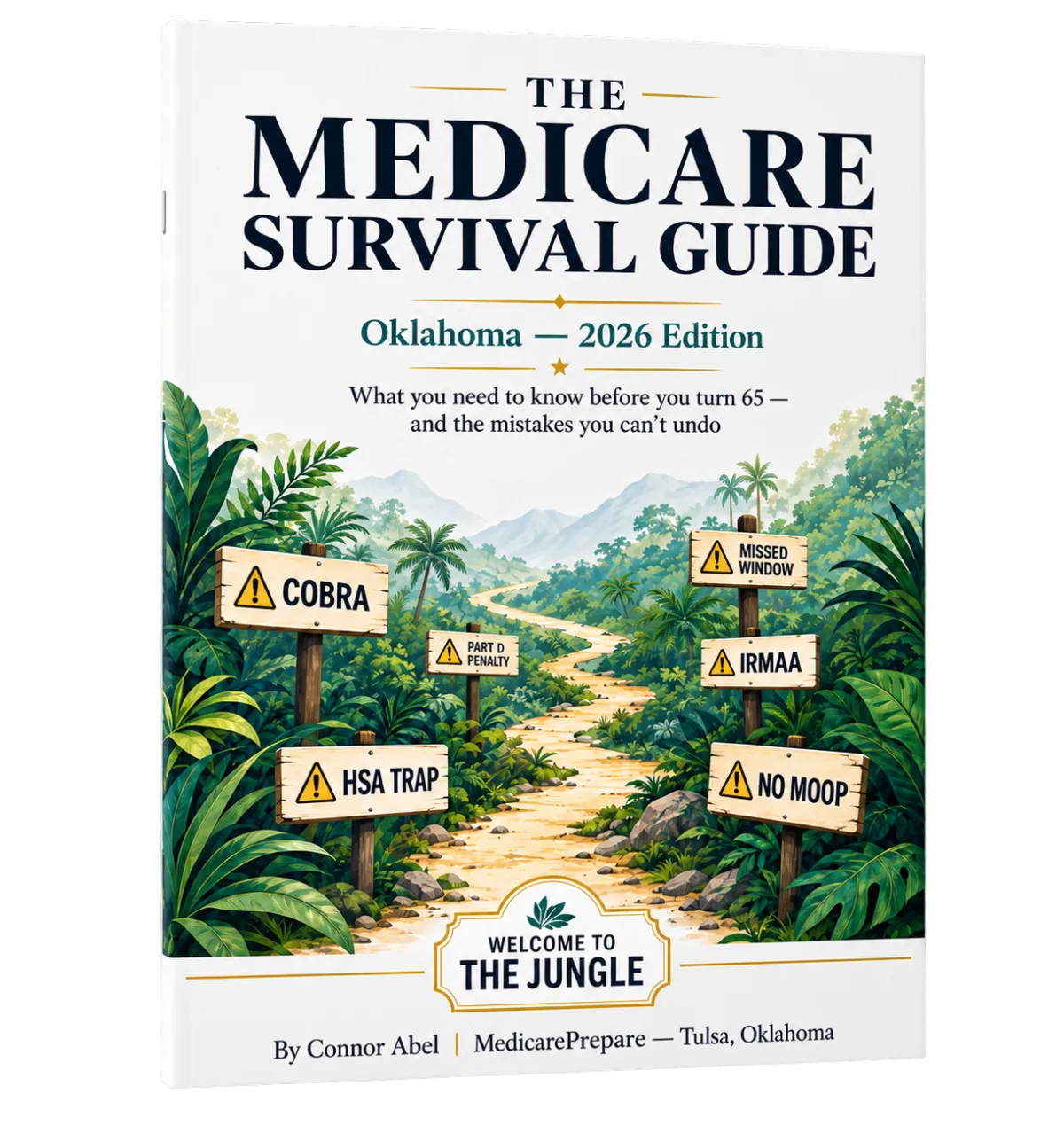
Grab Our Free
Comprehensive Guide to Medicare!
Medicare can be a nightmare to understand. We've helped hundreds of Baby Boomers navigate this journey, and we hope this book can help you too!
8014 S Sheridan Rd
Tulsa, OK 74133
Phone: (918) 420-9999
