Need Help? Call or Text: (918) 420-9999
Need Immediate Help? Call or Text: (918) 420-9999

Not a Government Entity
Questions? Call (918) 420-9999
Questions? Call (918) 420-9999
One Plan, One Card: Is Medicare Advantage Right for You?
Medicare Advantage (Part C) bundles your hospital, medical, and usually drug coverage into one plan with one card — often with dental, vision, and hearing included, sometimes for a $0 premium. Here's how it really works, and the specialized plans most people never hear about.

"The TV Ads Make It Sound Free. What's the Catch?"
Fair question. The honest answer: there's no catch, but there are trade-offs. These plans really can cost $0 a month and add benefits Original Medicare doesn't have — in exchange, you agree to use the plan's network and follow its rules. Whether that trade is a good deal depends entirely on your doctors, your medications, and your situation.
Maybe this sounds familiar:
• "Can I keep my own doctors?"
• "Is a $0 premium really $0?"
• "I have Medicaid too — is there a plan built for that?"
• "I'm a veteran — does this work with my VA benefits?"
All fair questions — and every one has a clear answer. The sections below cover the ones we hear most, including the specialized plans built for specific situations.
How Medicare Advantage Actually Works
Three things explain almost everything about these plans — how they're paid, why networks exist, and what protects your wallet.
It's Still Medicare — Run by a Private Plan
When you join an Advantage plan, Medicare pays that plan a set amount each month to manage your care, and the plan must cover everything Parts A and B cover. You keep paying your Part B premium, you keep Medicare's protections, and you can return to Original Medicare at a future enrollment window. The extras — dental, vision, hearing, and usually drug coverage — get layered on top. That's the bundle.
Networks and Rules Are the Trade-Off
Most Medicare Advantage plans are HMOs or PPOs, but you may also come across a PFFS (Private Fee-for-Service) plan.
No matter which type you choose, prior authorization, provider access, networks, and out-of-pocket costs can vary by plan. That's why we check your doctors, hospitals, prescriptions, and how you actually use your healthcare before comparing the benefits.
HMO (Health Maintenance Organization)
An HMO generally requires you to use the plan's network except for emergencies and certain other covered situations. Some services may also require referrals or prior authorization.
PPO (Preferred Provider Organization)
A PPO gives you more flexibility to see providers outside the network, but you may pay more when you do.
PFFS (Private Fee-for-Service) plan
A PFFS works differently. The plan determines how much it will pay and how much you may owe. Depending on the plan, you may be able to see any Medicare-approved provider who agrees to accept the plan's terms and conditions of payment. Some PFFS plans also have networks, so you should always confirm that a provider will accept the plan before receiving care.
Every Plan Caps Your Yearly Costs
Original Medicare has no ceiling on what a bad year can cost you — Advantage plans do. Every plan sets a yearly maximum out-of-pocket for covered medical care, and once you reach it, the plan pays 100% for the rest of the year. The cap varies widely by plan, which is why a $0-premium plan with a high cap can cost more in a rough year than a modest-premium plan with a low one. It's one of the first numbers we compare.
A quick fit-check before you enroll:
• Check that every doctor you see is in the plan's network — networks can change each year.
• Run your medication list against the plan's drug list — not just the premium.
• Know the windows — Oct 15–Dec 7 to join or switch plans, Jan 1–Mar 31 to change your mind.
• On Medicare and Medicaid — ask about Dual plans (D-SNP) before anything else.
• Living with diabetes, heart disease, or COPD — Chronic plans (C-SNP) are built around your condition.
We run every one of these checks for you — free, in one conversation.
Specialized Plans Most People Never Hear About
Dual Complete (D-SNP) and Chronic (C-SNP) Plans
If you have both Medicare and Medicaid, Dual Special Needs Plans — often sold under names like "Dual Complete" — are built specifically for you. $0 premiums, richer dental and vision, monthly allowances for groceries and utilities, and a care coordinator are common. If you live with a chronic condition like diabetes, heart disease, or COPD, Chronic Special Needs Plans (C-SNP) shape the drug list, specialists, and benefits around your condition. Both often come with enrollment flexibility the standard calendar doesn't allow.
Have VA or Indian Health Benefits? They Coordinate
Veterans: your VA benefits and a Medicare Advantage plan work side by side, not against each other. The VA keeps covering care at VA facilities, while the Advantage plan covers civilian doctors and hospitals close to home — and since many plans cost $0 a month, plenty of veterans add one as a second layer of coverage without giving anything up.
The same idea applies to Indian Health Service and tribal health benefits: joining a Medicare plan never takes away your access to IHS or tribal facilities. The coverages coordinate — you keep what you have, and the plan adds providers and benefits outside the IHS system. If either of these is your situation, tell us up front. It changes which plans we'd even show you.
Heard of the Giveback Plan? Here's How It Works
Some Medicare Advantage plans include a Part B Giveback — the plan pays back part or all of your Part B premium directly into your Social Security check, often $40-$150 a month. It's built into a limited number of plans in each area, not something you add on, so which carriers offer it depends on your ZIP code.
The trade-off is the same as any other low-premium plan: a narrower network and a real check of your doctors and medications before you enroll. A Giveback plan can be a great fit when your providers are in-network — we'll tell you plainly if they're not, rather than sell you on the premium credit alone.

You Don't Have to Sort This Out Alone
Work with a Local Expert
You could spend weeks cross-checking articles and still wonder what you missed. Or you could sit down with someone who explains this every day. We're education-first — our job is to help you understand your options before you ever choose a plan. No pressure, no obligation, and our guidance doesn't cost you anything. You ask the questions; you decide what happens next.
See Every Advantage Plan in Your Area — Side by Side
In one free conversation, we'll run your doctors, hospitals, and medication list against every Medicare Advantage plan in your area — including Dual, Chronic, and veteran-friendly options — and show you what each would really cost.
No pressure and no fees, ever. Just local, licensed agents who explain Medicare for a living. Call or text us at (918) 420-9999, or schedule your free consultation below.

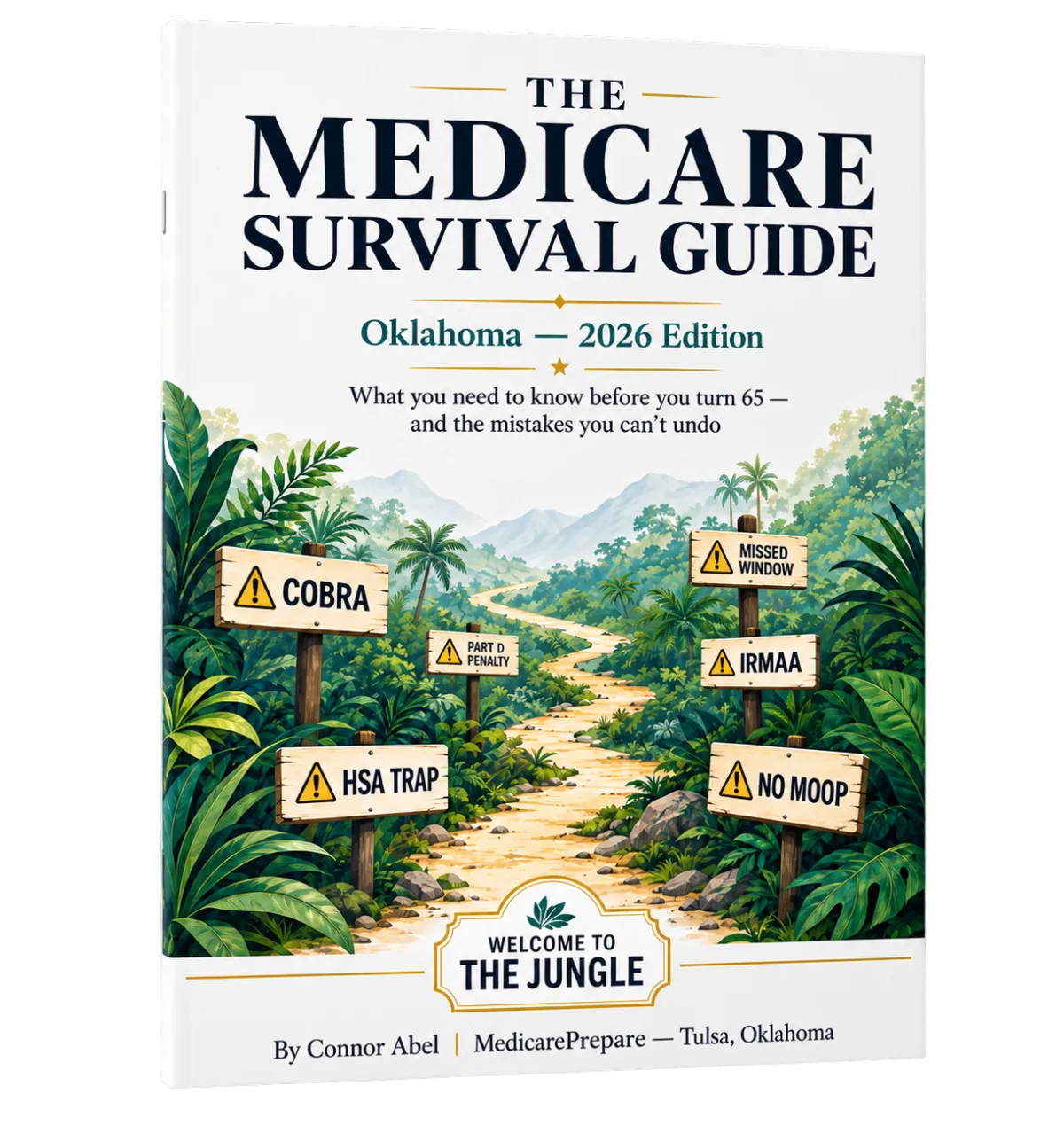
Grab Our Free
Comprehensive Guide to Medicare!
Medicare can be a nightmare to understand. We've helped hundreds of Baby Boomers navigate this journey, and we hope this book can help you too!

8014 S Sheridan Rd
Tulsa, OK 74133
Phone: (918) 420-9999
