Need Help? Call or Text: (918) 420-9999
Need Immediate Help? Call or Text: (918) 420-9999

Not a Government Entity
Questions? Call (918) 420-9999
Questions? Call (918) 420-9999
New to Medicare? Start Here.
Turning 65 or new to Medicare? You've got a lot of decisions to make, and the deadlines matter. Here's a clear, no-pressure walkthrough of what Medicare is, when to enroll, and what to do first.

Why Enrollment Timing Matters
Medicare enrollment isn't open year-round for everyone. Missing your window can mean a gap in coverage or a lifetime late-enrollment penalty, so it helps to know exactly when your personal deadline is.
Your Initial Enrollment Period
Most people get a 7-month Initial Enrollment Period (IEP) around their 65th birthday — 3 months before, your birthday month, and 3 months after. Enrolling in the first 3 months usually means your coverage starts on time, with no gap.
What Happens If You Miss Your Window
If you miss your Initial Enrollment Period, you may have to wait for the General Enrollment Period (January 1 to March 31) to sign up, and you could face a lifetime late-enrollment penalty added to your premium.
Are You Automatically Enrolled, or Do You Need to Sign Up?
If you're already receiving Social Security retirement benefits when you turn 65, you'll typically be automatically enrolled in Medicare Part A and Part B — your card arrives in the mail, no application needed. If you haven't started Social Security yet, enrollment isn't automatic: you'll need to sign up yourself through SSA.gov, by phone, or in person during your Initial Enrollment Period.
How to Actually Enroll in Medicare
Confirm your eligibility. Most people qualify at age 65, or earlier due to certain disabilities. Check your Social Security statement to see when your coverage can start.
Know your Initial Enrollment Period (IEP). This 7-month window runs from 3 months before your 65th birthday month through 3 months after it. Enrolling early in this window helps your coverage start on time.
Decide between Original Medicare and Medicare Advantage. Original Medicare (Parts A & B) offers flexibility to see any provider that accepts Medicare, while a Medicare Advantage (Part C) plan bundles coverage through a private insurer, often with extra benefits.
Consider Part D and Medigap coverage. If you don't have other creditable drug coverage, add a Part D prescription drug plan to avoid a lifetime late penalty. A Medigap policy can also help cover out-of-pocket costs like deductibles and coinsurance.
Gather your documents. Have your Social Security number, birth certificate or passport, proof of citizenship or legal residency, and details on any current health coverage ready before you apply.
Apply. You can apply online at SSA.gov (choose "Apply for Medicare Only" if you're not ready to claim Social Security benefits), by phone at 1-800-772-1213, or in person at your local Social Security office by appointment.
When to Enroll
Most first-timers enroll during their 7-month Initial Enrollment Period. Miss it, and you may face the General Enrollment Period (January 1 to March 31) along with a lifetime late penalty. For a full breakdown of every enrollment window, including Special Enrollment Periods and the Medicare Advantage Open Enrollment Period, visit our Enrollment Periods page.
Documents You'll Need
Social Security number
Birth certificate or passport
Proof of citizenship or legal residency
Details on any current health coverage (including employer plans)
Prior year's W-2 or tax return, if self-employed
Tips for First-Time Enrollees
Apply as soon as your Initial Enrollment Period opens to avoid gaps in coverage.
Set a calendar reminder for your enrollment window so you don't miss the deadline.
Keep working past 65? Ask your employer whether your group health coverage lets you delay Medicare without a penalty.
Review your prescriptions each year during Open Enrollment, since plan formularies and costs can change.
Not sure where to start? Call or text us at (918) 420-9999 and we'll walk you through your options at no cost.
Still Have Questions?
Every situation is a little different — your health needs, budget, current coverage, and which doctors you want to keep all factor in. There's no single "right" answer, just the option that fits you.

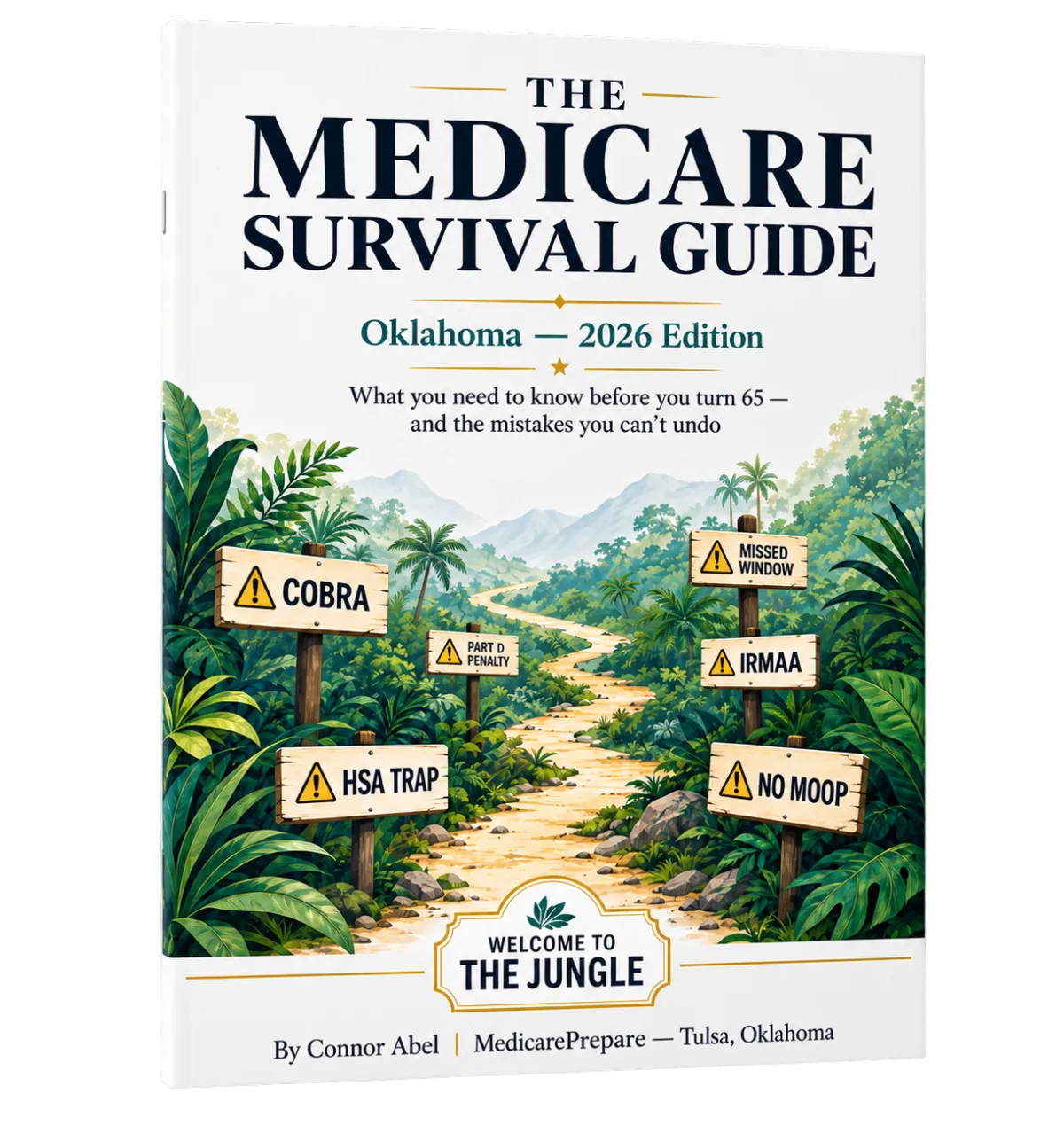
Grab Our Free
Comprehensive Guide to Medicare!
Medicare can be a nightmare to understand. We've helped hundreds of Baby Boomers navigate this journey, and we hope this book can help you too!

8014 S Sheridan Rd
Tulsa, OK 74133
Phone: (918) 420-9999
